Choosing a plastic injection moulding supplier is a decision that can have a lasting impact on your business. Whether you’re developing a new product, looking to manufacture an existing component or considering moving production to a different supplier, finding the right manufacturing partner is about much more than simply comparing prices.
The quality of the finished components is obviously important, but so is everything that happens behind the scenes. How well does the manufacturer understand your requirements? Can they offer practical engineering advice? What happens if your production volumes increase, your design needs changing or you encounter an issue further down the line?
These are the sorts of things that are worth considering before committing to a new supplier. A manufacturer might look competitive on paper, but the real value comes from their ability to support your project, understand your business and deliver consistently over the longer term.
If you’re currently looking for a plastic injection moulding company, here are 15 questions worth asking before making your decision.
1. Do they have experience manufacturing similar products?
Every injection moulding project brings its own challenges. A relatively straightforward plastic housing, for example, will have very different requirements to a component that needs to withstand mechanical stress, operate in a demanding environment or form part of a more complex assembly.
It’s worth asking a potential supplier about the types of components they’ve manufactured previously and whether they’ve worked with businesses in your industry.
This isn’t necessarily about finding a manufacturer that has produced an identical part. It’s about understanding whether they have the relevant experience and technical knowledge to recognise potential challenges and make informed recommendations.
A supplier with a good understanding of your application is more likely to ask the right questions, identify important design considerations and help you avoid problems further down the production process.
2. Can they support the project from design through to production?
If you’re developing a new product, the manufacturing process often starts long before the first component comes off an injection moulding machine.
There are design decisions to make, materials to consider, prototypes to assess and tooling requirements to work through. Having to coordinate several different suppliers throughout these stages can make the process unnecessarily complicated.
It’s worth finding out how much support a manufacturer can offer beyond the actual moulding process.
Can they help with product design and development? Do they offer prototyping and tooling services? Can they manufacture, assemble and package the finished product?
Working with a supplier that can support multiple stages of a project can make communication considerably easier. It also means the people responsible for manufacturing your component can be involved in important decisions from the outset.
For businesses developing new products, this kind of joined-up approach can be particularly valuable.
3. Will they offer advice on making your design suitable for injection moulding?
Having a finished design doesn’t necessarily mean it’s ready for production.
A component might look perfectly acceptable as a CAD model or prototype, but certain design features could make it difficult or unnecessarily expensive to manufacture using injection moulding.
This is where Design for Manufacture (DFM) becomes important.
A good manufacturing partner should be willing to review your design and highlight areas that could benefit from adjustment before tooling begins. This might involve looking at wall thickness, draft angles, ribs, bosses, material distribution or the overall complexity of the mould.
Small changes at this stage can make a considerable difference to how easily a component can be manufactured. They may also help avoid issues such as sink marks, warpage or difficulties releasing the finished part from the mould.
Rather than simply accepting a drawing and producing exactly what’s been supplied, look for a manufacturer that is prepared to question the design and offer practical advice where necessary.
4. What tooling capabilities do they have?
The mould tool is one of the most important parts of any injection moulding project. Its design and manufacture have a direct influence on the quality, consistency and efficiency of the finished component.
Before appointing a supplier, find out how they approach tooling. Can they assist with tool design? Do they manufacture tooling themselves or work with external tooling specialists? Who is responsible for maintenance, modifications and repairs?
It’s also important to establish ownership.
If you’re investing in a mould tool specifically for your product, you should have a clear understanding of who owns it, where it will be stored and what arrangements are in place if you decide to move production in the future.
Tooling represents a significant part of the manufacturing investment in many projects, so it’s worth getting these details agreed from the beginning.
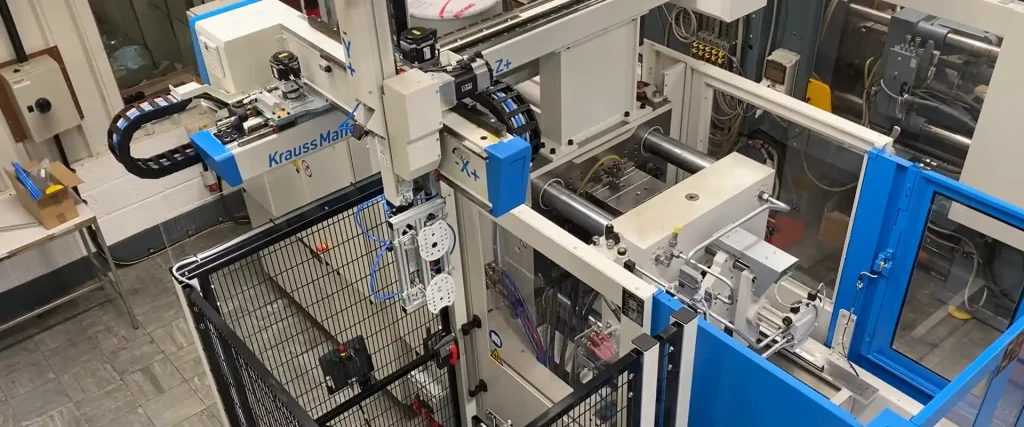
5. Can they accommodate your production volumes?
The right manufacturing arrangement will depend heavily on how many components you need and how frequently you expect to order them.
Some businesses require relatively small production runs, perhaps for a specialist product or an initial market launch. Others need thousands of components manufactured regularly to support established production lines.
Not every injection moulding supplier will be equally suited to both.
Discuss your current requirements, but don’t overlook what you might need in the future. If demand increases, will the manufacturer have the capacity to support additional production? Equally, if your requirements fluctuate, can they offer a degree of flexibility around order quantities and scheduling?
It’s also worth discussing minimum order quantities and how production costs change with volume.
Understanding these factors early will help you establish whether a supplier is a sensible long-term choice, rather than simply someone who can fulfil your first order.
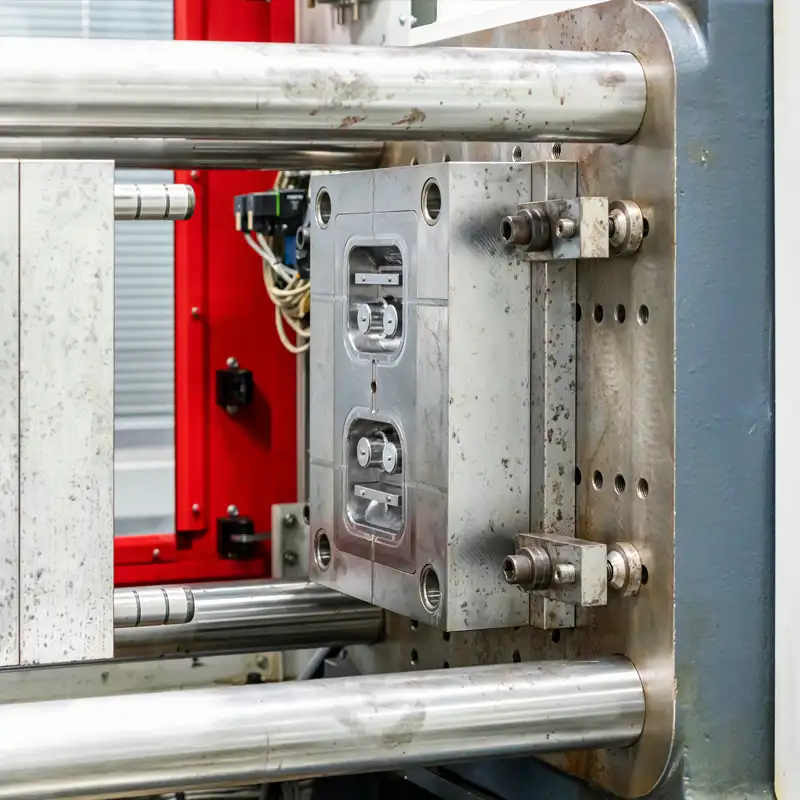
6. Can they help you choose the right plastic material?
Material selection is an important part of developing a successful plastic component, and it’s not always as straightforward as choosing the strongest or cheapest option.
Different plastics have different characteristics. Some offer excellent impact resistance, others are better suited to demanding temperatures, chemical exposure or applications where flexibility is important.
The right choice will depend on what the component needs to do, the environment it will operate in and the performance expected throughout its working life.
If you’re unsure which material is most suitable, ask whether the manufacturer can offer guidance.
An experienced injection moulding supplier should be able to discuss the practical differences between materials and explain how your choice could influence component performance, appearance, manufacturing costs and production.
It’s also worth discussing whether recycled materials or alternative material options could be appropriate if sustainability is part of your product requirements.
Getting this decision right early can help avoid unnecessary changes once production is underway.
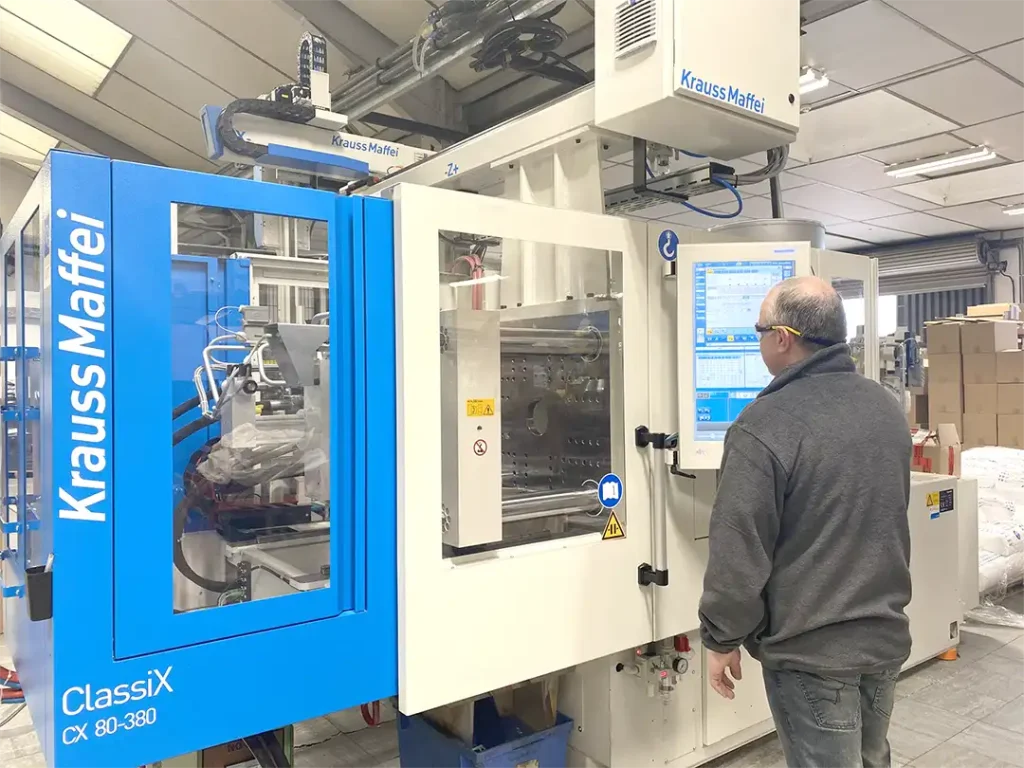
7. How do they maintain consistent quality?
Producing a good first sample is one thing. Manufacturing consistent components across hundreds, thousands or even millions of production cycles is another.
Quality control should be an important consideration when comparing potential suppliers, particularly if your components form part of a larger product or need to meet specific dimensional requirements.
Ask how the manufacturer monitors quality throughout production and what happens if a component doesn’t meet the agreed specification.
You might also want to understand how initial samples are approved, how finished components are inspected and what records are maintained during production.
If your business has particular quality requirements, customer specifications or industry standards that need to be followed, discuss these before placing an order.
The important thing is to understand how quality is managed in practice, rather than relying on general assurances that a supplier produces high-quality components.
8. Are their manufacturing facilities suitable for your project?
It’s easy to focus on the finished product when comparing manufacturers, but it’s equally important to understand the facilities and equipment used to produce it.
Injection moulding machines come in different sizes and have different capabilities. The suitability of a particular machine will depend on factors such as component dimensions, tooling requirements and the type of plastic being processed.
Depending on your project, you may also need access to additional manufacturing processes or specialist production environments.
Ask about the equipment available and whether the manufacturer has the facilities to accommodate your particular requirements.
If possible, arrange a visit to the factory.
Seeing the manufacturing environment first-hand can tell you a lot about how a business operates. You’ll have the opportunity to see the equipment, understand how production is organised and speak directly with the people involved in manufacturing your components.
It’s also a useful opportunity to get a feel for the business and the level of care taken with its operations.
9. What lead times should you expect?
Lead times are an important consideration, particularly if your plastic components are needed to support an existing manufacturing process or meet customer delivery commitments.
For a new project, it’s important to understand that producing the components is only one part of the overall timescale.
Before manufacturing can begin, there may be design reviews, tooling manufacture, initial samples and approval stages to complete. The complexity of the component and the requirements of the project will influence how long these stages take.
Ask for a realistic indication of the overall project timescale, rather than just an estimate of how quickly production parts can be manufactured.
For ongoing orders, discuss typical production lead times, scheduling and how the supplier manages changes in demand.
Clear communication is particularly important here. Manufacturing timescales can change as projects develop, so you want a supplier that will keep you informed and address potential delays rather than leaving you chasing for updates.
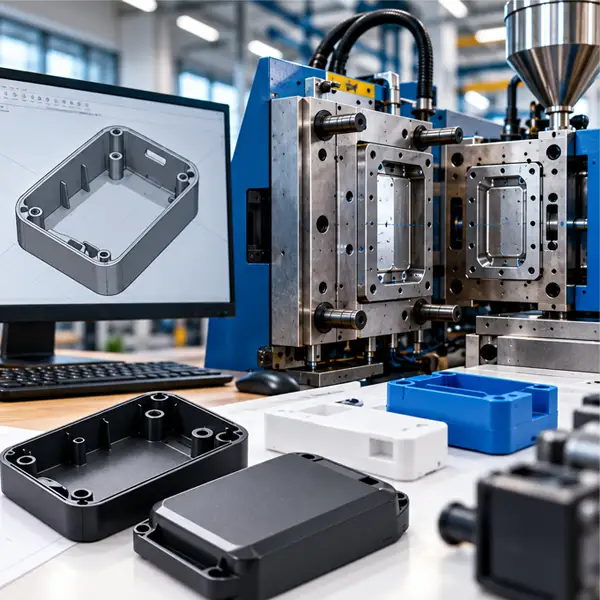
10. Can they manufacture and assemble the finished product?
For many businesses, the injection moulded component is just one part of a much larger product.
Once a component has been manufactured, it may need to be joined to other parts, fitted with electrical elements, assembled into a finished product or prepared for packaging and distribution.
This is worth considering when choosing a supplier because managing these additional processes separately can introduce more administration, transport and coordination.
Some injection moulding manufacturers offer a wider range of services alongside component production. These might include ultrasonic welding, cable overmoulding, product assembly and packaging.
If your product requires any of these processes, ask whether they can be handled by the same supplier.
Having more of the manufacturing process managed in one place can simplify your supply chain and make it easier to oversee the journey from individual components to the finished product.
11. Do they understand the requirements of your industry?
Manufacturing requirements can vary considerably between industries, and the suitability of a supplier will depend partly on the applications they are accustomed to supporting.
A business producing components for medical devices, for example, may have different expectations around manufacturing environments, materials and quality management compared with a manufacturer supplying components for agricultural equipment or consumer products.
Similarly, electronics, aerospace, defence and rail applications can introduce their own technical and supply chain considerations.
If your project has specific requirements, make sure the manufacturer understands them.
This could include particular material specifications, cleanliness requirements, dimensional tolerances, documentation or customer-defined quality standards.
It’s also worth asking for clarification about any certifications or approvals that are relevant to your project. Don’t assume a supplier has a particular accreditation simply because they manufacture components for your industry.
The important thing is to establish whether they can meet the requirements of your application and provide the necessary evidence.

12. How will communication and project management work?
A manufacturing relationship can involve a surprising amount of communication, particularly during the early stages of a new project.
Designs may need reviewing, samples may require approval and production arrangements may need adjusting as requirements become clearer.
If communication is poor, even relatively straightforward projects can become frustrating.
Before appointing a supplier, find out who you’ll be dealing with and how projects are managed.
Will you have a consistent point of contact? Can you speak directly with the technical team when necessary? How are design changes and production issues communicated?
These details might not seem particularly important when comparing initial quotations, but they can make a real difference once a project is underway.
You want a manufacturer that takes an interest in your requirements, responds to questions and is willing to work with you when challenges arise.
13. Are their prices competitive, and what is actually included?
Price will always play a part in choosing a manufacturing supplier, but comparing quotations isn’t always as simple as looking at the cost per component.
Two manufacturers might provide very different prices because they’re offering different levels of service or including different elements within their quotations.
For example, one quotation might cover tooling, moulding and assembly, while another only includes the production of the moulded component.
Before comparing prices, make sure you understand exactly what’s included.
It’s worth clarifying tooling costs, material charges, production quantities, secondary operations, inspection, packaging and delivery. You should also establish whether there are any additional charges for engineering changes, tooling modifications or storage.
Looking at the overall cost of getting your finished product manufactured will give you a much better basis for comparison.
The cheapest initial quotation isn’t necessarily the most economical option over the lifetime of a product. Reliability, component quality, production efficiency and the level of support available should all form part of the decision.

14. Can they support you as your business grows?
When choosing a manufacturing supplier, it’s worth looking beyond your immediate requirements.
Perhaps you’re launching a new product and initially need relatively small quantities. If it proves successful, those requirements could increase considerably. Alternatively, an established product range might expand to include additional components or variations.
Ideally, your manufacturing partner should be able to grow alongside those changing requirements.
Ask about their production capacity, how they manage increasing demand and whether they can support additional products or manufacturing processes in the future.
It’s also worth discussing how they manage ongoing orders and production planning.
A supplier that understands your longer-term objectives is more likely to become a useful part of your wider supply chain, rather than simply fulfilling individual orders as they arise.
15. Can they demonstrate what they’re capable of?
Ultimately, you need to feel confident that a manufacturer can deliver what they’re proposing.
Before making a decision, ask to see examples of their work, find out more about their facilities and, where possible, speak to the people who would be involved in your project.
A factory visit can be particularly useful. It gives you the chance to see the manufacturing processes, understand the equipment available and get a better appreciation of the business behind the quotation.
You should also feel comfortable asking detailed questions about their capabilities, experience and approach to manufacturing.
A good supplier won’t expect you to make a decision based on a price alone. They should be willing to explain how they work, discuss your requirements and demonstrate where they can add value.
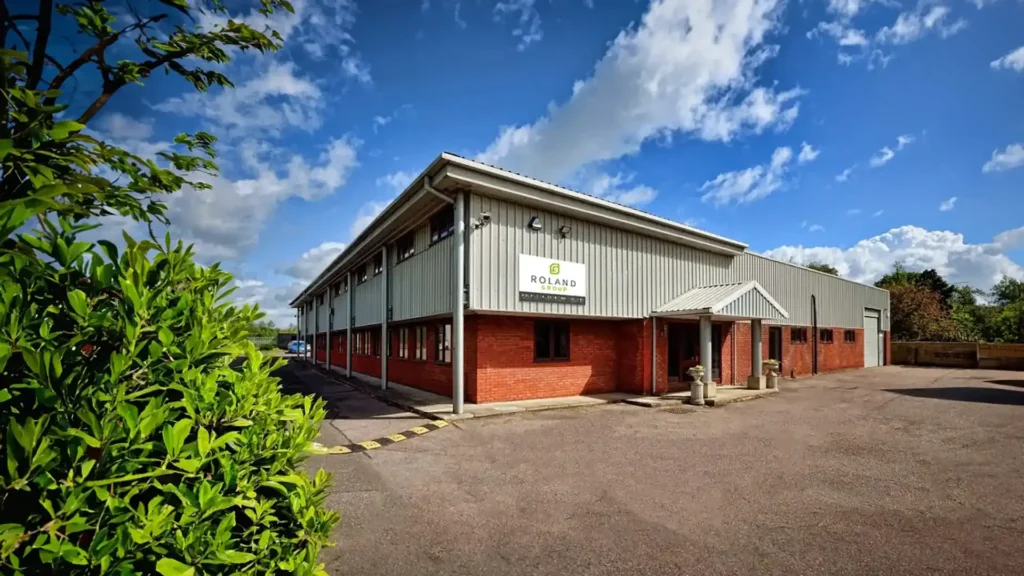
Looking for a UK Plastic Injection Moulding Supplier?
At Roland Plastics, we work with businesses across a wide range of industries, providing UK-based plastic injection moulding and manufacturing support.
Our capabilities extend beyond component production, with services including product design and development, DFM, tooling, prototyping, ultrasonic welding, cable overmoulding, assembly and packaging.
Whether you’re developing something new, looking to move existing production or searching for a manufacturing partner to support ongoing requirements, we’re ready to become your Plastic Injection Moulding Supplier.
Get in touch with Roland Plastics to find out more about our manufacturing capabilities and how we could support your business.