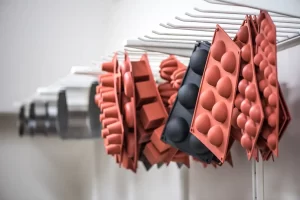
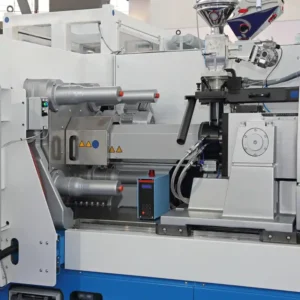
When you hear plastic injection moulding, you might picture something fairly industrial: Factory appliances, machine housings or technical parts hidden inside a piece of equipment.
But look around you.
There’s a very good chance that dozens of the plastic products you use every day are injection moulded. The process is everywhere. It’s used to manufacture everything from the buttons on your car dashboard to the handle of your kitchen utensil. Once you understand what injection moulding can do, you start seeing it everywhere.
So, for a change, rather than talking about tooling, cycle times and material selection, let’s look at five everyday products that you might not realise are injection moulded.
Toothbrushes
A toothbrush seems like a simple product. A handle, some bristles and you’re done.
But producing millions of identical toothbrush handles efficiently is actually a great example of where plastic injection moulding comes into its own.
The handle needs to be strong enough to withstand repeated use, comfortable to hold, and consistent from one product to the next. It may also contain curves, grips, logos, textures and other small details that need to be reproduced accurately.
Injection moulding makes all of that possible.
A mould tool can incorporate detailed surface textures and branding directly into the finished component, meaning there’s often no need for additional machining or finishing.
Many modern toothbrushes also use multiple materials or components. The rigid plastic handle may be combined with softer materials to create a more comfortable grip.
The next time you’re brushing your teeth, take a look at the handle. There’s a surprising amount of manufacturing technology hiding in there.

Car Interior Components
Your car is essentially a rolling showcase for injection moulding.
Look around the interior and you’ll find injection moulded plastic components almost everywhere:
- Dashboard components
- Door handles
- Air vents
- Centre consoles
- Switch surrounds
- Storage compartments
- Trim panels
- Cup holders
- Seat components
These parts aren’t simply about making a vehicle look good. They need to meet demanding requirements for strength, durability, temperature resistance and dimensional accuracy.
A dashboard, for example, can spend years exposed to significant temperature changes. It needs to remain stable in freezing winter conditions and during a hot summer afternoon when the interior temperature rises dramatically.
The ability to select different engineering plastics and manufacture highly repeatable components makes injection moulding particularly well suited to the automotive industry. And there’s another benefit: injection moulding allows manufacturers to integrate multiple features into a single component.
Instead of producing several separate pieces and assembling them afterwards, clips, mounting points, ribs and other features can often be incorporated directly into the moulded part.
That can reduce both manufacturing and assembly costs.

Lego Bricks
Here’s one that most people know, but may never have thought about from a manufacturing perspective. The humble LEGO brick is an incredible example of precision plastic injection moulding.
The reason LEGO bricks from different decades can still connect together is largely down to manufacturing consistency.
The dimensions have to be incredibly accurate.
The tubes underneath the brick need to interact correctly with the studs on another brick. The walls need to be straight. The material needs to have the right balance of strength and flexibility. And every brick needs to be virtually identical.
That’s precisely the sort of challenge injection moulding is designed to solve. A production mould can produce huge numbers of identical components, with each cycle repeating the same process.
It’s also a good example of why tooling quality matters.
The mould itself effectively defines the final shape of the product. A well-designed and maintained injection moulding tool can produce enormous quantities of components while maintaining consistent dimensions and surface quality.
So while a LEGO brick might look simple, it’s actually a very good demonstration of what precision plastic manufacturing can achieve.

Electrical Plugs and Sockets
Some of the most important injection moulded products are the ones we barely notice. Electrical plugs, sockets, connectors and switch components are common examples.
These products require more than just a good-looking finish. The plastic needs to provide electrical insulation and withstand the physical demands of everyday use.
Different materials can be selected depending on the application, with engineering plastics offering properties such as:
- Electrical insulation
- Heat resistance
- Impact resistance
- Flame retardancy
- Dimensional stability
Injection moulding also allows manufacturers to create highly detailed components around metal inserts, terminals and other internal parts. This is particularly useful when manufacturing electrical and electronic products where plastic housings need to protect sensitive components.
Again, consistency matters.
A small variation in a connector or housing could affect how components fit together, which is why precision injection moulding is widely used throughout the electrical and electronics industries.

Kitchen and Household Products
Here’s where injection moulding becomes almost impossible to ignore.
Open a kitchen drawer and you’ll probably find dozens of moulded plastic components. Food containers. Measuring cups. Utensil handles. Storage boxes. Appliance components. Lids. Clips. Switches. The list goes on.
Household products are particularly well suited to custom plastic moulding because manufacturers can create attractive, functional products while keeping production costs under control.
A plastic storage container, for example, needs to be lightweight, durable and easy to manufacture in large quantities. A mould can produce the basic shape repeatedly, while textures, logos, ribs, handles and other features can all be incorporated into the design.
Material choice is also important.
A product intended for food contact may require a suitable food-grade plastic. Something used outdoors might need UV resistance. A component near a heat source may require a material with greater temperature resistance.
The moulding process stays broadly the same, but the material and product design can be tailored to the application.

Why Are So Many Products Injection Moulded?
There’s a reason injection moulding appears in so many different industries. The process combines speed, precision, repeatability and scalability.
Once a production tool has been manufactured, it can produce large quantities of identical components with relatively little variation between parts. This makes it particularly attractive for products that need to be manufactured in hundreds, thousands or even millions of units.
But it’s not just about volume. Injection moulding also gives product designers enormous freedom.
Features such as:
- Curves and complex shapes
- Snap-fit connections
- Ribs and reinforcing structures
- Living hinges
- Textured surfaces
- Logos and branding
- Integrated fixing points
All of these can potentially be incorporated into an injection moulded component. That’s one of the reasons injection moulding remains such an important manufacturing process.
From Simple Products to Highly Technical Injection Moulded Components
One of the most interesting things about injection moulding is the sheer range of products it can produce.
At one end of the scale, you have relatively simple everyday objects such as storage containers and household accessories.
At the other, you have highly engineered components used in:
- Automotive manufacturing
- Aerospace
- Defence
- Medical equipment
- Electronics
- Industrial machinery
- Food processing
- Consumer technology
The difference isn’t necessarily the moulding process itself. It’s the combination of product design, tooling, material selection and manufacturing controls applied to the project.
That’s where an experienced injection moulding manufacturer can add real value.
Good Manufacturing Starts Before the Machine
It’s easy to think of injection moulding as simply putting plastic into a machine and getting a finished component out the other side.
In reality, successful production starts much earlier.
The design of the component, choice of material and construction of the mould tool all have a major influence on the final result.
For example, a small change to wall thickness could improve cycle time and reduce material consumption. A carefully positioned rib could strengthen a component without adding unnecessary weight. Adding the correct draft angle could make the part easier to remove from the mould.
These decisions are often made before the first production part is ever manufactured. This is why working with an experienced plastic injection moulding company early in the product development process can be so valuable.
Bringing Injection Moulded Products to Life at Roland Plastics
At Roland Plastics, we manufacture a wide range of custom plastic components for customers across the UK and internationally.
Our work spans everything from relatively straightforward consumer products through to technically demanding components for specialist industries.
We support customers throughout the manufacturing journey, including:
- Product and design discussions
- Design for Manufacture (DFM)
- Prototyping
- Injection mould tooling
- Plastic injection moulding
- Assembly and finishing
- Production and repeat manufacturing
The finished component might be something highly visible to the end customer or something that quietly sits inside another product doing an important job.
Either way, our approach is the same: understand what the component needs to do, work out the most effective way to manufacture it, and produce it consistently.
So, What Will You Spot Next?
Once you start looking, injection moulded products are difficult to miss.
The next time you’re in your car, making a cup of coffee, opening a food container or plugging in an electrical appliance, take a second to look at the plastic components around you.
There’s a good chance that many of them started life as molten plastic being injected into a carefully engineered mould.
That’s the beauty of injection moulding. It can produce something incredibly simple, or something highly technical, using the same fundamental manufacturing principle. And when you combine good product design, the right material, quality tooling and experienced manufacturing, the possibilities are surprisingly broad.
If you’re developing a new product or looking for a UK partner to manufacture custom plastic products, we’d be happy to discuss your requirements and explore how Roland Plastics could help.
You can also follow us on LinkedIn to keep up to date with the latest news, manufacturing insights and developments from Roland Plastics, your trusted UK plastic injection moulding company.