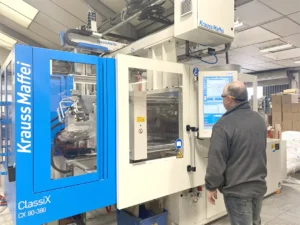
Injection moulding vs 3D printing is one of the earliest manufacturing decisions you’ll face when developing a new product. Both technologies have transformed modern manufacturing and both have a valuable role to play in product development. However, they serve very different purposes, and choosing the wrong process can lead to unnecessary costs, delays, or limitations further down the line.
At Roland Plastics, we regularly speak with product designers, start-ups, engineers, and procurement teams who are weighing up the benefits of each approach. While 3D printing often dominates conversations around innovation and prototyping, injection moulding remains the gold standard for producing high-quality plastic parts at scale.
So which process is right for your product? Let’s take a closer look.
Understanding the Difference
Although both methods are used to manufacture plastic components, the way they create parts is fundamentally different.
What is 3D Printing?
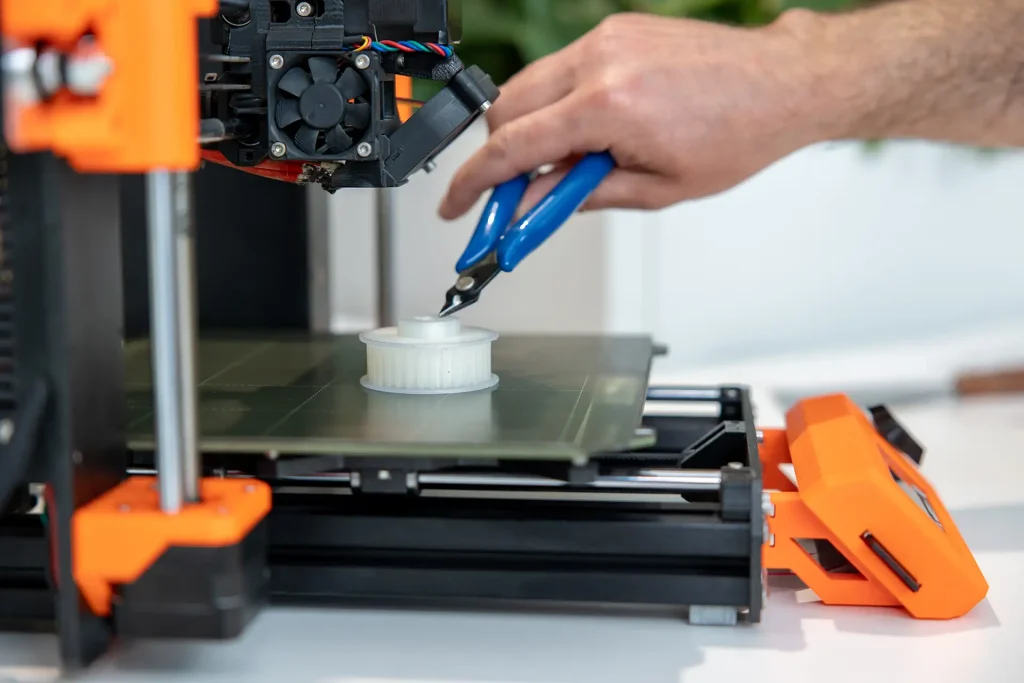
3D printing, also known as additive manufacturing, creates parts layer by layer from a digital CAD model. Rather than using a mould tool, the printer builds the component gradually until the finished shape is formed.
This makes 3D printing extremely flexible and ideal for low-volume production, concept development, and rapid design iterations.
What is Plastic Injection Moulding?
Plastic injection moulding involves injecting molten plastic into a precision-engineered mould tool under high pressure.
Once cooled, the part is ejected and the process repeats.
Although tooling requires an initial investment, injection moulding allows manufacturers to produce thousands (or even millions) of identical parts with exceptional consistency.
This is why everything from automotive components and medical devices to household products and electronic enclosures are commonly manufactured using injection moulding.
When 3D Printing Makes Sense
There is no denying that 3D printing has changed the way products are developed.
For designers and inventors, it provides a fast and relatively affordable way to test ideas before committing to production tooling.
3D printing is particularly useful for:
- Early-stage product concepts
- Design validation
- Functional testing
- One-off components
- Demonstration models
- Small production runs
Imagine you’ve developed a new consumer product. Rather than investing immediately in tooling, you can 3D print several versions, make design changes, gather feedback, and refine the product before moving into production.
This flexibility makes additive manufacturing a powerful development tool.
However, what works brilliantly for prototypes doesn’t always work for production.
Where 3D Printing Begins to Struggle
The biggest limitation of 3D printing is scalability.
While producing one part may be quick, producing hundreds or thousands of parts becomes significantly slower and more expensive.
Common challenges include:
Production Speed
A single component may take several hours to print. Injection moulding can often produce the same part in seconds.
Consistency
Printed parts can vary slightly depending on machine calibration, orientation, and environmental conditions. Injection moulding delivers near-identical parts throughout an entire production run.
Surface Finish
Although print quality has improved dramatically, moulded parts typically achieve a more professional appearance straight from the machine.
Material Properties
Many engineering-grade materials available in injection moulding simply outperform their 3D-printed equivalents in terms of strength, durability, impact resistance, and long-term reliability.
Why Injection Moulding Remains the Manufacturing Standard
If your goal is to manufacture a product commercially, plastic injection moulding is often the most efficient and cost-effective solution. Once tooling has been produced, the benefits become clear.
Exceptional Repeatability
Every manufacturer wants consistency. Whether you’re producing 500 parts or 500,000 parts, customers expect every component to perform exactly the same way.
Injection moulding provides:
- Tight tolerances
- Consistent dimensions
- Reliable material performance
- Repeatable production quality
This is particularly important in industries such as medical, aerospace, automotive, and electronics.
Lower Unit Costs
Many people are initially concerned about tooling costs. However, focusing only on tooling often overlooks the bigger picture.
A mould tool may represent an upfront investment, but once in production the cost per part can become remarkably low. As production volumes increase, injection moulding rapidly becomes more economical than 3D printing.
For example:
- 10 parts = 3D printing often wins
- 100 parts = depends on complexity
- 1,000+ parts = injection moulding often becomes significantly more cost-effective
- 10,000+ parts = injection moulding is usually the clear winner
Superior Material Choice
Injection moulding provides access to a huge range of engineering plastics, including:
- ABS
- Polypropylene (PP)
- Nylon (PA)
- Polycarbonate (PC)
- Acetal (POM)
- Glass-filled materials
- Food-grade plastics
- Medical-grade polymers
This allows products to be engineered for specific applications and environments.
Faster Production at Scale
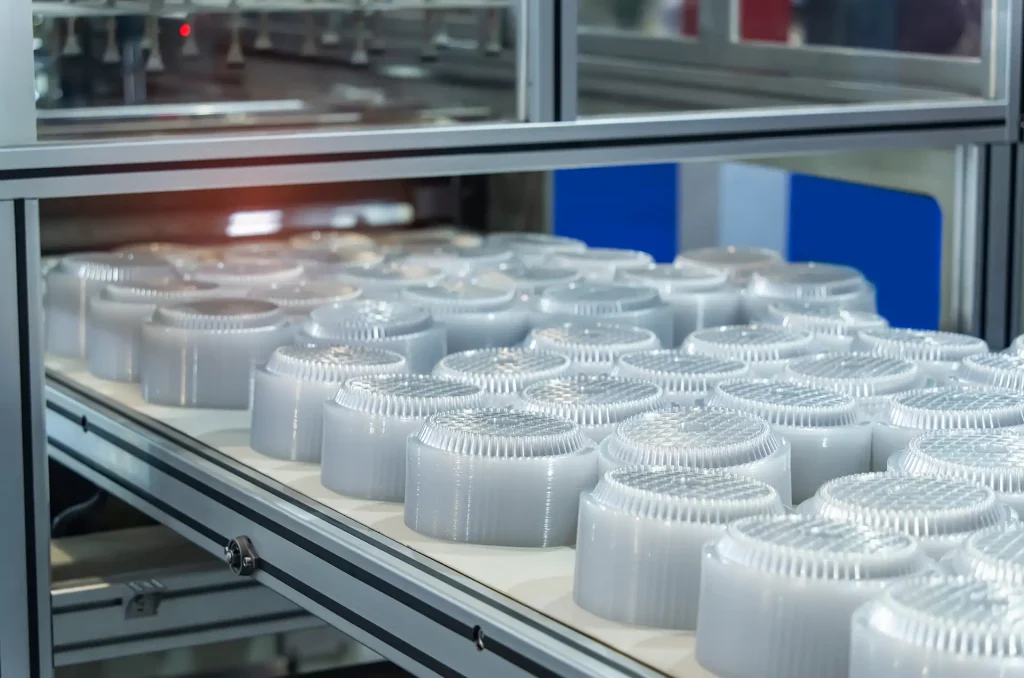
Once a mould tool is operational, production can move incredibly quickly. A moulded component may have a cycle time of 10–60 seconds. Compare that with several hours for a complex 3D printed part, and the difference becomes obvious.
The Best Solution Often Uses Both
Many people assume the choice is injection moulding vs 3D printing. In reality, the most successful product developments often use both.
A common journey looks like this:
Stage 1: Concept Development: Use 3D printing to evaluate ideas quickly.
Stage 2: Prototype Refinement: Modify the design, test functionality, and gather user feedback.
Stage 3: Design for Manufacture (DFM): Work with an injection moulding partner to optimise the design for production.
Stage 4: Tooling: Create a production-ready mould tool.
Stage 5: Injection Moulding Production: Manufacture consistent, high-quality components at scale.
This hybrid approach combines the speed of additive manufacturing with the efficiency of injection moulding.
Questions to Ask Before Choosing
If you’re unsure which route is best, ask yourself:
- How many parts do I need?
- Is this a prototype or a commercial product?
- Does appearance matter?
- Does the part require high strength?
- Will the product scale in the future?
- What is my budget?
- How quickly do I need parts?
The answers usually point quite clearly towards one solution.
How Roland Plastics Can Help
At Roland Plastics, we support customers from a broad range of industries throughout the entire product development journey.
Whether you’re developing an initial prototype or preparing for full-scale production, our team can provide practical advice on manufacturing strategy, tooling investment, and material selection.
We regularly work with:
- Product designers
- Start-ups
- Entrepreneurs
- Engineers
- Procurement teams
- Established manufacturers
Our goal is simple: help you choose the most effective route to market.
Sometimes that starts with a prototype. Sometimes it starts with tooling. Either way, getting the right advice early can save significant time and cost later.
Final Thoughts on Injection Moulding vs 3D Printing
Plastic injection moulding vs 3D printing… these two are not competitors, they are complementary technologies.
3D printing excels at speed, flexibility, and development. Injection moulding excels at consistency, scalability, and cost-effective production. Injection moulding excels at consistency, scalability, and cost-effective production.
Understanding when to use each process is one of the most important decisions in product development.
If you’re considering a new product and would like guidance on the best manufacturing approach, the team at Roland Plastics would be delighted to help.
Get in touch today to discuss your project and discover how we can support your journey from concept to production.
You can also follow us on LinkedIn to keep up to date on all our latest news and developments.