Plastic plays a critical role in modern food production, packaging, storage, and processing. From component parts inside food manufacturing equipment to storage containers and dispensing systems, food-grade plastic is everywhere.
However, when it comes to injection moulding for food contact applications, material choice and processing standards are absolutely critical. Not all plastics are suitable for direct contact with food — and using the wrong specification can lead to compliance issues, contamination risks, and costly product recalls.
What Is Food-Grade Plastic?
A food-grade plastic is a material that complies with strict regulatory standards confirming it is safe for direct contact with food under specific conditions.
In the UK and Europe, this typically means compliance with:
- EU Framework Regulation (EC) No 1935/2004
- EU Regulation 10/2011 on plastic materials intended to come into contact with food
These regulations ensure that plastics do not transfer harmful substances into food at levels that could endanger health or alter taste, smell, or composition. It’s important to understand that “food-grade” does not mean universally safe in all situations. Suitability depends on:
- Temperature exposure
- Type of food (acidic, fatty, dry, liquid)
- Duration of contact
- Reusability
For example, a component designed for dry food storage may not be appropriate for high-temperature liquid applications.
Why Injection Moulding Is Ideal for Food Applications
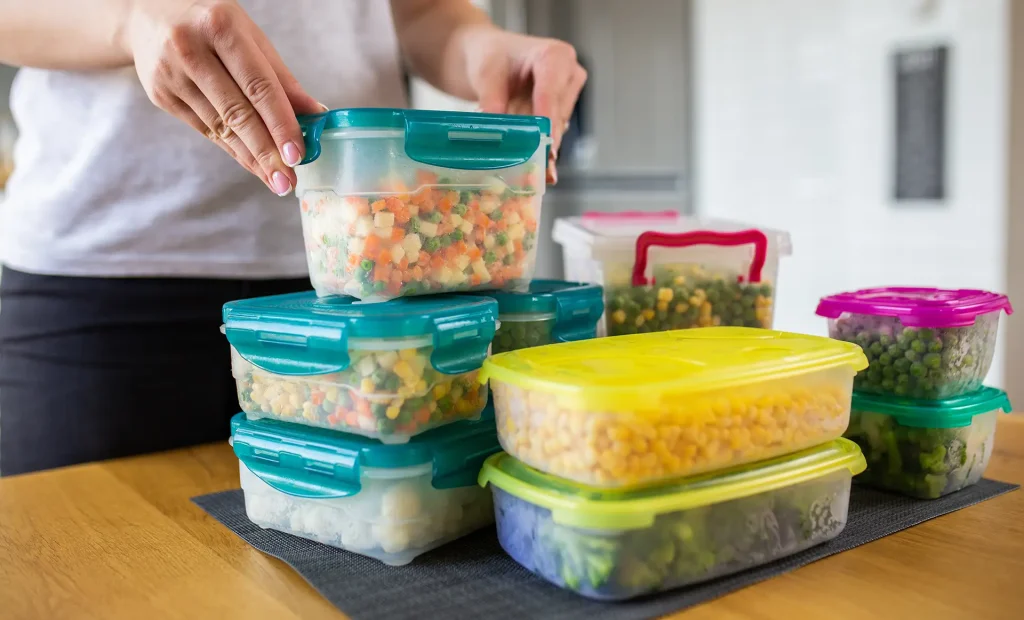
Injection moulding is widely used for manufacturing food-contact plastic components because it delivers:
- Precision and repeatability
- Smooth, hygienic surface finishes
- High-volume production capability
- Material consistency
The process allows for tightly controlled manufacturing environments and consistent quality standards, both of which are essential when producing food-grade plastic parts.
At Roland Plastics, we understand that when moulding for food-related industries, compliance and traceability are just as important as dimensional accuracy. Our clean-room manufacturing capability also supports products that require enhanced environmental control, helping to minimise contamination and maintain strict hygiene standards.
Common Food-Grade Plastics Used in Injection Moulding
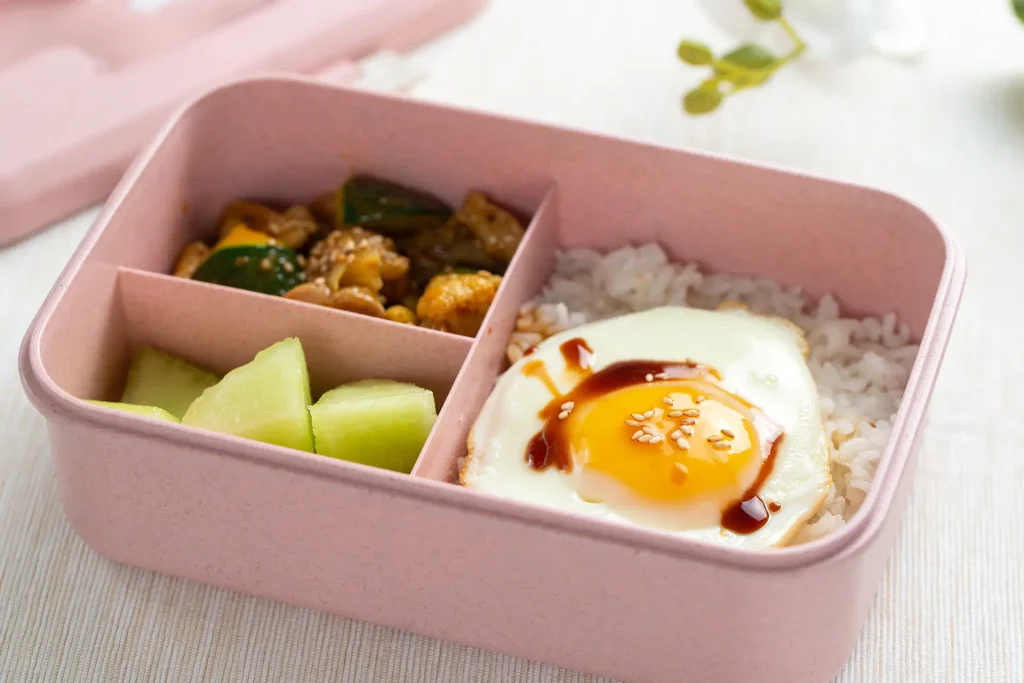
Different food applications require different material characteristics. Below are some of the most widely specified plastics in food-grade injection moulding projects.
Polypropylene (PP)
Polypropylene is one of the most versatile food-grade plastics available.
Why it’s used:
- Excellent chemical resistance
- High temperature tolerance
- Suitable for microwave and hot-fill applications
- Durable and fatigue-resistant
Common uses include:
- Food storage containers
- Lids and closures
- Dispensing components
- Food processing equipment parts
Its ability to withstand temperatures up to approximately 120°C makes it ideal for applications involving heat exposure.
High-Density Polyethylene (HDPE)
HDPE is known for its strength, durability, and moisture resistance.
Benefits:
- Strong chemical resistance
- Low moisture absorption
- Impact resistance
- Non-porous surface
It is commonly used in:
- Beverage containers
- Food bins
- Dairy packaging components
- Cutting boards and food preparation surfaces
Its smooth surface helps reduce bacterial retention, making it a reliable option for hygienic environments.
Polyethylene Terephthalate (PET)
PET is often associated with transparent food packaging, but it is also used in certain injection moulded applications.
Key characteristics:
- Excellent clarity
- Good barrier properties
- Strong dimensional stability
PET is typically used where product visibility is important, such as food trays and display packaging.
Engineering Plastics for Food Processing Equipment
Beyond packaging, food manufacturing environments often require more technical materials. Certain engineering-grade plastics can be specified for:
- Conveyor components
- Wear strips
- Machine guards
- Mechanical housings
These materials must combine food compliance with strength, wear resistance, and dimensional stability.
Key Considerations When Specifying Food-Grade Injection Moulded Parts
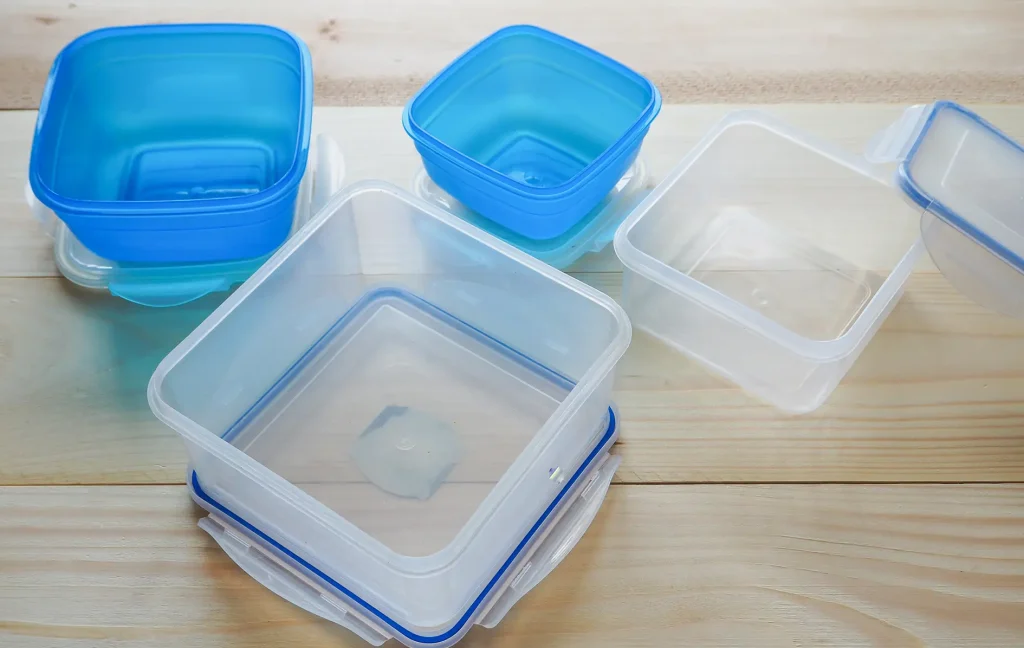
Choosing the right material is only part of the process. There are several additional factors that influence compliance and long-term performance.
1. Migration Testing and Compliance Documentation
Food-grade plastics must meet migration limits, meaning they cannot release harmful substances into food under expected usage conditions.
At Roland Plastics, we are able to provide:
- Material data sheets
- Declarations of compliance
- Traceability documentation
Without proper certification, it is impossible to verify suitability.
2. Temperature Resistance
Temperature exposure significantly impacts plastic performance.
Questions to consider:
- Will the part be exposed to hot liquids?
- Is microwave use expected?
- Will the component undergo regular dishwashing or sterilisation?
Incorrect temperature specification can lead to warping, degradation, or chemical instability.
3. Chemical Exposure
Food types vary dramatically. Acidic foods, oils, alcohols, and cleaning agents all interact differently with plastic.
For example:
- Fatty foods may require materials with strong oil resistance
- Acidic products may demand enhanced chemical stability
Material selection must reflect the real-world environment.
4. Surface Finish and Hygiene
Injection moulding naturally produces smooth surfaces, but tooling design and finish quality matter.
Hygienic considerations include:
- Avoiding micro-crevices
- Ensuring easy cleanability
- Reducing bacterial retention points
Tooling design can influence how effectively a part supports hygiene standards in food processing environments.
5. Use of Virgin Materials
In most food-contact injection moulding applications, virgin resin is specified to ensure purity and compliance.
While recycled plastics are increasingly used across many industries, food-contact applications require strict controls. Reprocessed materials must meet specific regulatory approvals, and not all recycled content qualifies.
Food-Grade Plastic Injection Moulding at Roland Plastics
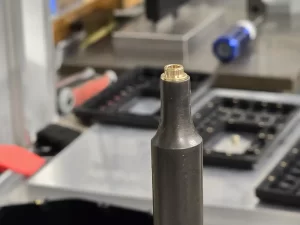
At Roland Plastics, we support customers across multiple industries with precision injection moulding services, including projects requiring food-grade plastic materials. We’ve had the opportunity to partner with another Suffolk company to create a mixing spoon designed for beer brewing kits.
Our team works closely with customers to:
- Advise on appropriate material selection
- Ensure regulatory documentation is available
- Maintain consistent quality standards
- Deliver reliable, repeatable production
Whether you require food-contact packaging components or technical moulded parts for food processing environments, selecting the right material and manufacturing partner is key.
If you’re developing a product that requires food-grade injection moulding, our team is happy to discuss your requirements and help you move confidently from concept to production.

Why Choose Roland Plastics?
As a UK-based, family-owned plastic injection moulding company, Roland Plastics combines decades of industry knowledge with a responsive and adaptable approach to manufacturing. We’re set up to manage technically demanding, high-volume production while still giving each project the care and attention it deserves.
When partnering with Roland Plastics, you can expect:
✅ An experienced in-house team of engineers and moulding specialists
✅ Transparent communication from your first enquiry through to final delivery
✅ Fast turnaround on quotations, tooling, sampling and production
✅ A commitment to efficient and environmentally responsible manufacturing
✅ Consistent, dependable quality across every production run
Our aim is straightforward: to help bring your product to market successfully.
If you’re ready to transform an idea into a finished product, our team can support you at every step — from early-stage design advice and prototyping through to full-scale plastic injection moulding production.
Get in touch with our team to discuss your next project.
You can also follow us on LinkedIn.